
Publication Date:
Reading Time:
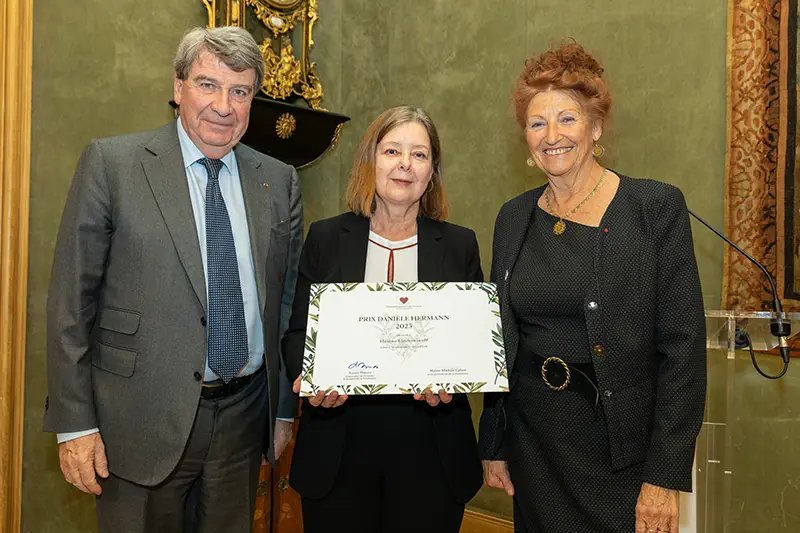
On Wednesday, April 1, 2026, Professor Hélène Eltchaninoff, Head of Cardiology at Rouen University Hospital, received the Danièle-Hermann Prize at the Palais de l’Institut de France. Awarded by the Cardiovascular Research Foundation (Institut de France), the prize includes €30,000 and recognizes a career dedicated to medical innovation and research in cardiovascular disease, particularly heart valve disease.
For the Alain Cribier Institute, this recognition carries special meaning. Hélène Eltchaninoff was one of the longtime collaborators of Professor Alain Cribier, global pioneer of percutaneous techniques, and today continues that legacy through an ambitious vision for structural cardiology in Rouen.
The Danièle-Hermann Prize honors the achievements of a distinguished researcher in the cardiovascular field. The April 1, 2026 ceremony also highlighted the growing importance of research into cardiovascular disease in women, with dedicated grants awarded the same evening.
This distinction recognizes the impact of long-term commitment: therapeutic innovation, scientific rigor, team leadership, and the development of research programs.
It also highlights a major public health issue: heart valve disease affects millions of people, and its prevalence continues to rise as the population ages.
Professor Eltchaninoff is recognized at the highest level in part for her role in a clinical revolution: TAVI (Transcatheter Aortic Valve Implantation), also known as transcatheter aortic valve replacement.
In 2002, she participated in the world’s first transcatheter aortic valve implantation performed in Rouen, a procedure allowing replacement of a diseased aortic valve without opening the chest and without open-heart surgery.
This approach transformed treatment for aortic stenosis by offering an option to patients who were often older, frail, or at high surgical risk.
Since that first procedure, catheter-based valve treatments have expanded considerably and continue to evolve, now including mitral and tricuspid regurgitation, three valve conditions that represent major clinical and organizational challenges today.
During the award ceremony, Professor Hélène Eltchaninoff expressed her emotion and the symbolic importance of this recognition, emphasizing the need to continue the work initiated by Alain Cribier and sustain its scientific ambition over time.
Her career reflects a clear conviction: medical innovation does not come only from a single discovery, but from an ecosystem combining clinical care, research, education, and dissemination of best practices, exactly what defines the Alain Cribier Institute.
At Rouen University Hospital, Professor Eltchaninoff has helped build, over many years, a dynamic environment of research and innovation serving patients with heart valve disease.
This approach aligns with an essential modern priority: better understanding valve disease mechanisms, improving diagnosis, accelerating access to innovation, and making care pathways clearer and more equitable across regions.
The Alain Cribier Institute’s 2026-2030 strategy underscores the scale of the challenge: heart valve disease is often diagnosed late, even though complications can be severe, with major effects on quality of life, independence, and hospitalization rates.
Beyond Rouen University Hospital, Professor Eltchaninoff’s impact also extends nationally.
Since 2025, she has served as President of the French Society of Cardiology, while also serving as Medical Director of the Alain Cribier Institute.
This dual leadership strengthens the Institute’s ability to extend Rouen’s expertise, contribute to standards of care, and unite professionals around heart valve disease.
Behind a scientific prize lies a very practical goal: improving patients’ lives.
Dans le cadre de cette remise de prix, la Professeure Hélène Eltchaninoff a exprimé son émotion et la portée symbolique de cette reconnaissance, soulignant l’importance de poursuivre les travaux initiés par Alain Cribier et d’en porter l’ambition scientifique dans la durée.
Son parcours illustre une conviction forte : l’innovation médicale ne naît pas seulement d’une découverte isolée, mais d’un écosystème combinant clinique, recherche, formation et diffusion des pratiques — exactement ce qui fait l’ADN de l’Institut Alain Cribier.
Au CHU de Rouen, la Professeure Eltchaninoff a contribué à structurer, au fil des années, une dynamique de recherche et d’innovation au service des patients atteints de valvulopathies. Cette approche s’inscrit dans une logique aujourd’hui incontournable : mieux comprendre les mécanismes des maladies valvulaires, améliorer le diagnostic, accélérer l’accès aux innovations, et rendre les parcours de soins plus lisibles et plus équitables selon les territoires.
La stratégie de l’Institut Alain Cribier 2026–2030 rappelle l’ampleur de l’enjeu : les valvulopathies sont souvent diagnostiquées tardivement, alors que leurs complications peuvent être sévères, avec des impacts majeurs sur la qualité de vie, l’autonomie et les hospitalisations.
Au-delà du CHU de Rouen, l’action de la Professeure Eltchaninoff s’inscrit aussi dans une dimension nationale. Depuis 2025, elle est présidente de la Société Française de Cardiologie, et elle exerce également la fonction de directrice médicale de l’Institut Alain Cribier. Cette double responsabilité renforce la capacité de l’Institut à faire rayonner l’expertise rouennaise, à contribuer aux standards de prise en charge, et à fédérer les professionnels autour des maladies valvulaires.
Derrière un prix scientifique, il y a un objectif très concret : améliorer la vie des patients.
Les valvulopathies peuvent rester silencieuses longtemps. Elles se manifestent parfois par un essoufflement, une fatigue inhabituelle, des douleurs thoraciques ou des malaises. Lorsqu’elles deviennent sévères, elles peuvent engager le pronostic vital si elles ne sont pas traitées. L’enjeu est donc double : détecter plus tôt et proposer les traitements les plus adaptés, notamment grâce aux approches percutanées issues de l’histoire rouennaise.
En valorisant une carrière dédiée aux valvulopathies, le Prix Danièle-Hermann met aussi en lumière une médecine qui progresse au bénéfice direct des patients : moins d’invasivité, récupération plus rapide, indication élargie à des profils fragiles, et amélioration continue des dispositifs.
Cette distinction rappelle une réalité : la recherche et l’innovation ont besoin de moyens durables pour aller plus vite, plus loin, et toucher plus de patients.
L’Institut Alain Cribier est né d’un héritage unique, celui d’une révolution thérapeutique initiée à Rouen, et d’une ambition : structurer un pôle de référence international dans les valvulopathies en combinant soin, recherche, formation et sensibilisation.

On April 16, the heart of Rouen beat to the rhythm of prevention. On the forecourt of the Cathedral, the Alain Cribier Institute, together with Rouen University Hospital and Alliance du Cœur, transformed a complex public health issue into a unique human and educational experience.
A look back at a record-breaking day that reflects the very purpose of our Institute: medical excellence for all.
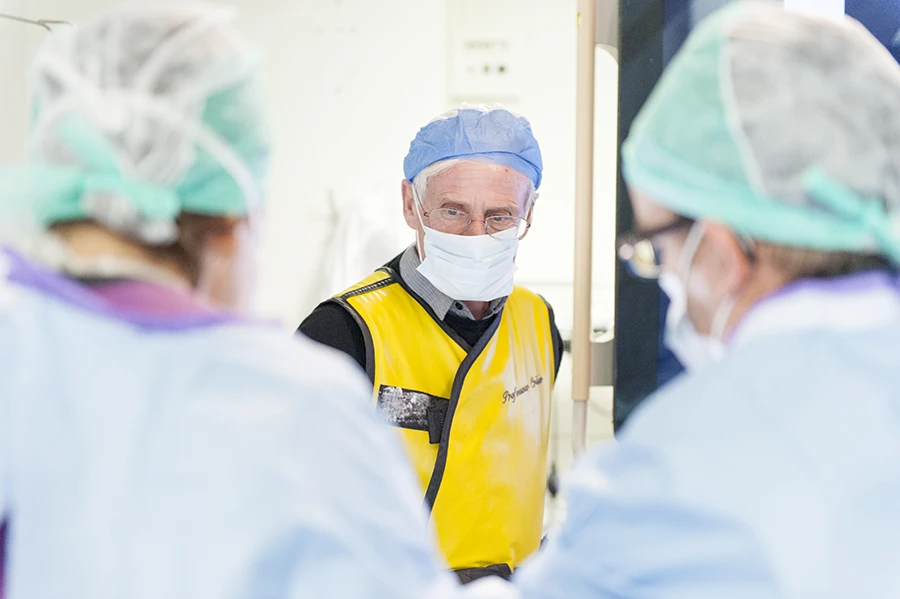
Professor Alain Cribier (1945–2024) is universally recognized as one of the greatest innovators in modern cardiology. His name is inseparable from a major medical revolution: the development of percutaneous treatment for heart valve disease, and in particular transcatheter aortic valve implantation, known as TAVI.
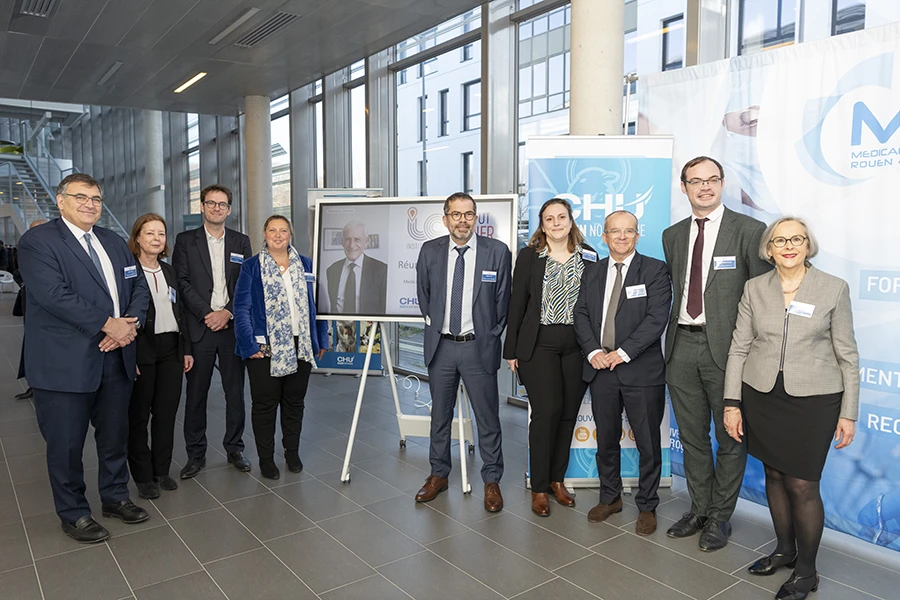
The Alain Cribier Institute was born from an exceptional medical history, but also from a shared determination to structure and extend a unique legacy in the field of heart valve disease.
On Wednesday, April 1, 2026, Professor Hélène Eltchaninoff, Head of Cardiology at Rouen University Hospital, received the Danièle-Hermann Prize at the Palais de l’Institut de France. Awarded by the Cardiovascular Research Foundation (Institut de France), the prize includes €30,000 and recognizes a career dedicated to medical innovation and research in cardiovascular disease, particularly heart valve disease.
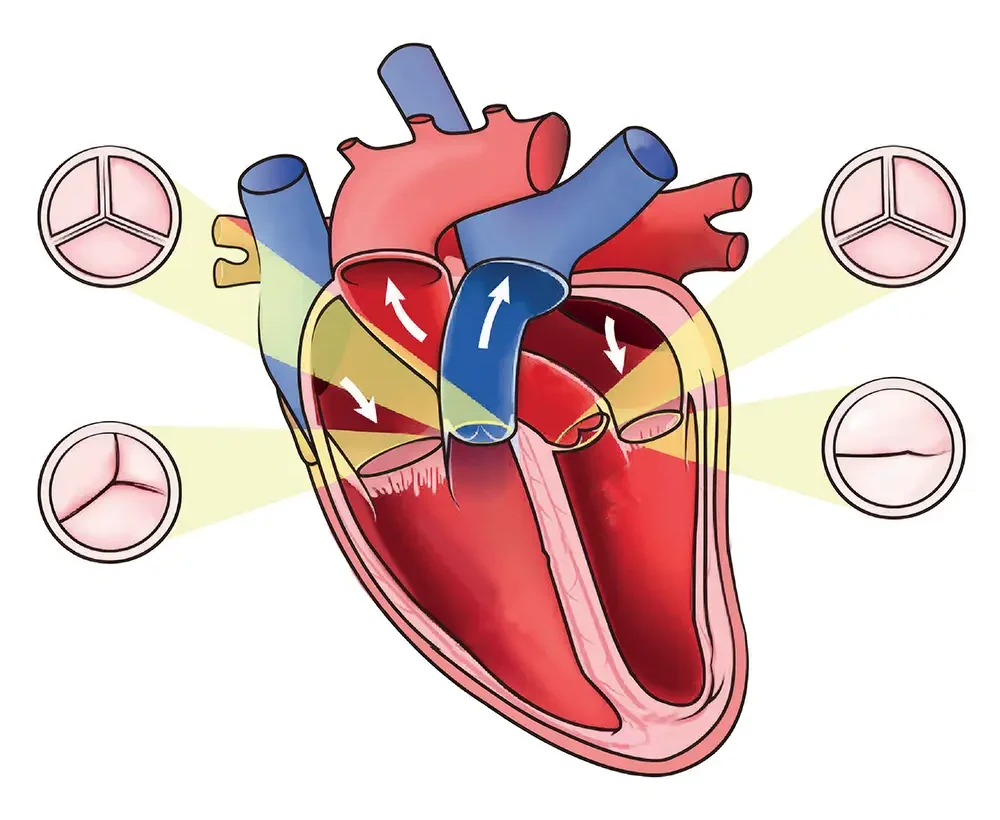
Heart valve disease is increasing as the population ages. Today, nearly 30 million people worldwide are estimated to be living with heart valve disease, a number that could double by 2050. In Europe, more than 10% of people over age 75 are believed to have moderate to severe valve disease.