
The Institut Alain Cribier
A world-class center of excellence dedicated to heart valve disease
As a leading reference center, the Institut Alain Cribier brings together patient care, research, education, and public health initiatives around one shared goal: to sustainably improve the management of heart valve disease by placing patients at the center of every action and every innovation.
An Exceptional Legacy, A Global Ambition
Inspired by the legacy of Professor Alain Cribier (1945–2024), a global pioneer in minimally invasive valve treatment, the Institute builds on more than 30 years of clinical and scientific innovation born in Rouen, including the TAVI revolution that helped launch modern structural cardiology.
Our 2026–2030 vision: make the Institut Alain Cribier the world’s leading center of excellence dedicated to heart valve disease by combining clinical expertise, translational research, breakthrough technologies, and active patient involvement. Some people leave a legacy. Others alter medicine.
A History of Innovation: The Legacy of Professor Alain Cribier
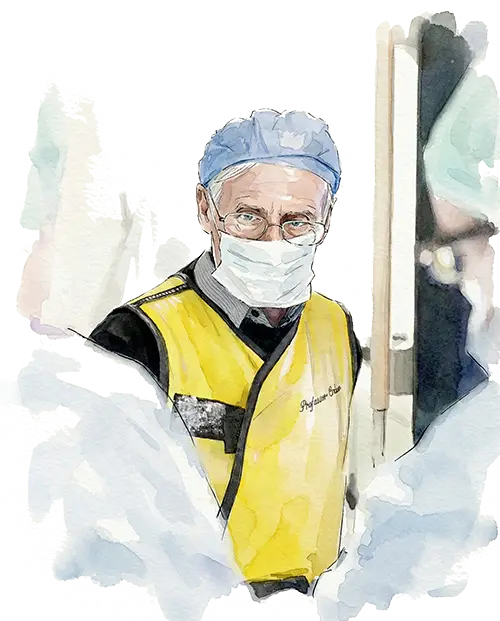
Alain Cribier (1945–2024):
An Inventor in Service of Patients
Former Head of Cardiology at Rouen University Hospital (1997–2010) and later Emeritus Professor, Professor Alain Cribier dedicated his career to one simple yet radical idea: making cardiac treatments more effective and less invasive for the most vulnerable patients.
Clinician, researcher, and inventor, he played a major role in the rise of modern interventional cardiology. His career was marked by a rare ability to turn medical intuition into practical solutions through scientific rigor, experimentation, and close collaboration with hospital, academic, and industry teams.
His scientific work includes more than 1,500 indexed publications and has been recognized with numerous honors in France and internationally.
But beyond awards, Professor Cribier’s legacy is measured by impact: innovations that changed the lives of millions of patients worldwide, and a culture of boldness and knowledge-sharing that continues to inspire the Institute today.
The TAVI Journey:
From Idea to a World First
(1985 > 2002)
The history of TAVI began with one conviction: offer less invasive treatments for often elderly and fragile patients while maintaining the highest standards of effectiveness and safety.
- 1985 – World first balloon aortic valvuloplasty: proof that a percutaneous approach could change the outlook for inoperable patients.
- 1996 – First transseptal mitral commissurotomy: another milestone in interventional valve innovation.
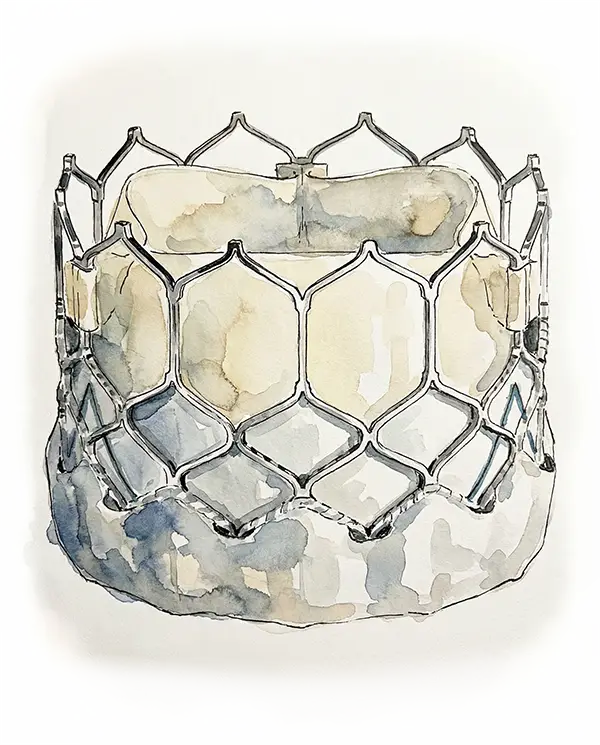
- April 16, 2002 – First-ever transcatheter aortic valve implantation (TAVI) performed in Rouen: a technological breakthrough that transformed treatment of aortic stenosis.
This breakthrough then accelerated the development of new interventional strategies, now extended to mitral and tricuspid regurgitation, with devices already in use or under multicenter evaluation.
A Living Legacy:
Boldness, Collaboration, Transmission
Professor Cribier’s legacy is not only an invention. It is a culture that guides the Institute every day.
- Boldness: explore, test, evaluate, and continuously improve clinical practice.
- Collaboration: unite clinicians, researchers, engineers, partners, and patients around a shared vision.
- Transmission: train and share expertise through the Medical Training Center (MTC) and dedicated fellowship programs.
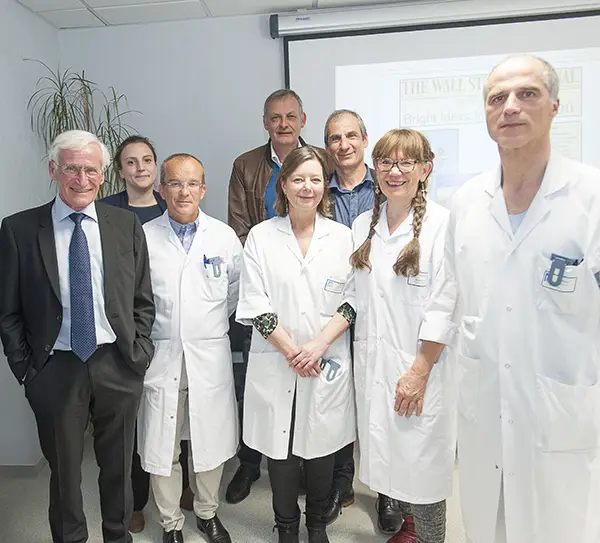
The Institute at a Glance
+
years
of clinical and scientific innovation
4+ million
patients treated with TAVI since 2002

National and international
partnerships
Thousands of patients
cared for each year by our teams
Vision & Mission 2026–2030
Vision 2030:
Diagnose Better to Treat Better
By 2030, we aim to deliver care for heart valve disease that is earlier, more personalized, and more patient-centered.
- Earlier, by improving detection and diagnosis through artificial intelligence and community-based screening.
- More personalized, by adapting treatment decisions to each patient profile using advanced imaging and biomarkers.
- More patient-centered, by integrating the experience and expertise of those directly affected into care pathways, education, and continuous improvement, especially through the development of expert-patient roles and co-design initiatives.
Our 2026–2030 Ambitions
Our strategic plan builds on Rouen’s history through five key commitments:
- Preserve and extend a unique legacy of innovation.
- Support a deep transformation of care delivery (earlier diagnosis, more precise evaluation, stronger coordination).
- Recognize patients as central partners in care and projects (expert patients, co-design).
- Become a catalyst for discoveries and medical transformation (multidisciplinary research, academic and industry partnerships).
- Build an open, collaborative, and unifying ecosystem (researchers, clinicians, engineers, patients, partners).
Our Mission

Care
Deliver rapid, equitable, and coordinated care within the Heart Team model.

Research
Accelerate high-level translational research to turn discoveries into patient benefit faster.

Education
Train a new generation of global experts through multidisciplinary excellence programs.

Awareness
Engage patients, the public, and decision-makers to reduce underdiagnosis . Because ignoring disease has remained weirdly popular.
Committed Scientific and Medical Leadership
The Alain Cribier Institute is built on academic medical governance combining clinical expertise, scientific excellence, and strategic leadership.
Hélène Eltchaninoff
MEDICAL DIRECTOR
Éric Durand
DEPUTY DIRECTOR
Delphine Béziau-Gasnier
EXECUTIVE DIRECTOR
Governance & Oversight
To ensure rigor, transparency, and effectiveness, the 2026–2030 plan relies on structured leadership: a multi-year roadmap, annual milestones, and performance dashboards covering care, research, education, awareness, and patient participation.
Board of Directors
Defines the Institute’s strategic direction, validates key priorities, ensures alignment with its public-interest mission, and oversees governance, ethics, transparency, and balanced scientific, human, and financial development.
Scientific Committee
Provides independent oversight of scientific quality. Helps define research priorities, evaluates projects, promotes collaboration across teams and disciplines, and supports dissemination through publications, conferences, and guidelines.
Founders Committee
Brings together founding institutions and key stakeholders to ensure shared vision and aligned leadership for the 2026–2030 ambition. Supports coordination across hospital, university, and research partners.
International Scientific Advisory Board (SAB)
An advisory body composed of international experts that provides strategic recommendations with a long-term global perspective.