Understanding Heart Valve Disease
Understand better to act at the right time.
Heart valve disease is common, yet still poorly understood. Better awareness helps recognize warning signs, take action earlier, and improve long-term care for every patient. Strange how knowing things remains useful.
What Is Heart Valve Disease?
A condition that affects the valves of the heart
Heart valve disease refers to conditions that affect the heart valves, the essential structures that allow blood to flow properly through the heart.
When valves no longer open or close correctly, the heart must work harder to do its job. Over time, this can lead to serious complications such as heart failure if left untreated.
There are two main types of valve disease:
- Stenosis (the valve does not open fully, creating an obstruction to blood flow)
- Regurgitation or insufficiency (the valve does not close properly, causing blood to leak backward)
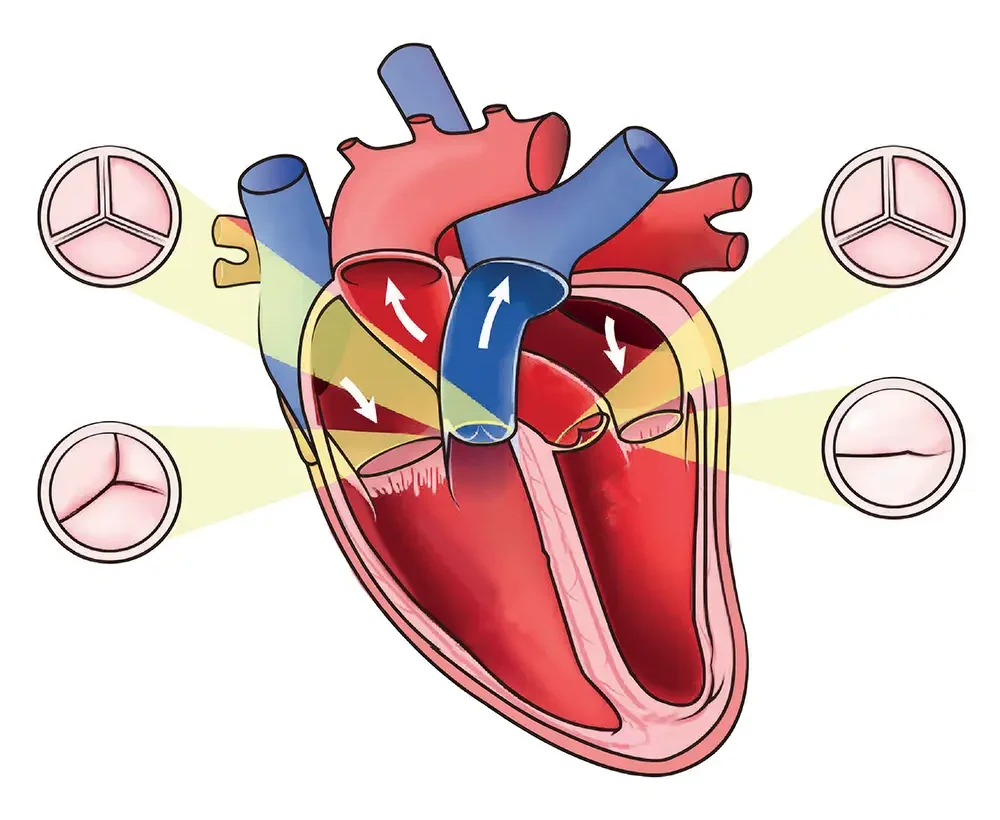
La valve aortique
La valve mitrale
La valve tricuspide
La valve pulmonaire
The Heart Has Four Valves
The heart works like a pump equipped with four valves that open and close in coordination:
Aortic valve, between the left ventricle and the aorta
Mitral valve, between the left atrium and left ventricle
Tricuspid valve, between the right atrium and right ventricle
Pulmonary valve, between the right ventricle and the pulmonary artery
A problem affecting any of these valves can disrupt heart function and oxygen delivery throughout the body.
A Silent Disease… As Common as Alzheimer’s
Heart valve disease affects nearly 13 million people in Europe, especially with advancing age. This number is expected to double by 2050.
Yet these conditions remain poorly known by the general public.
This is partly because:
- Symptoms often appear gradually and are mistaken for normal aging.
- They may be dismissed as age-related fatigue or loss of fitness.
- Diagnosis is not always made systematically due to lack of regular heart auscultation.
Early screening can significantly improve treatment outcomes. An annoyingly preventable pattern.
Why am I short of breath?
When a valve does not work properly, blood circulates less efficiently.
If the valve is narrowed (stenosis), the heart must push harder to move blood forward. If the valve leaks (regurgitation), some blood flows backward and the heart must pump more.
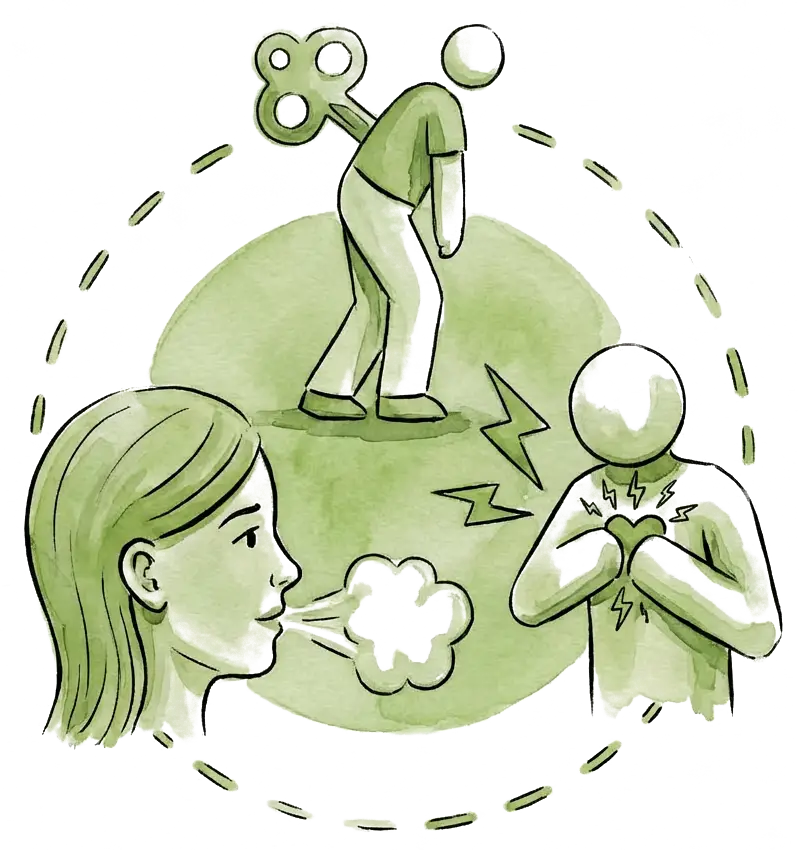
The result: during activity, and sometimes even at rest, the body receives less oxygen. Pressure may also build up in the lungs, causing shortness of breath, unusual fatigue, and sometimes palpitations or dizziness.
A heart murmur may be a sign, but only a simple and painless exam, especially an echocardiogram, can confirm and assess the condition.

Symptoms you should notignore
Symptoms vary depending on the valve involved and disease progression. Common signs include:
- Shortness of breath
- during activity or at rest
- Unusual fatigue
- Palpitations
- Chest pain
- Fainting spells or dizziness
These symptoms are not specific to valve disease, but if they appear or worsen, medical evaluation should not be delayed.
Diagnosis based on simple tests
Diagnosis of heart valve disease relies on:
- A fundamental clinical exam: listening to the heart with a stethoscope by your doctor
• Imaging tests: such as echocardiography
• If needed: more specialized testing performed by expert teams
Today, advances in medical imaging make it possible to assess valve conditions precisely and tailor treatment to each patient.
When should I see a doctor?
It is recommended to consult your primary care physician:
- If you have persistent or unusual symptoms
- If a heart murmur is detected, even incidentally
- If you have a history of heart disease
- If you are at higher risk, especially after age 65
Early care can prevent complications and provide access to appropriate treatments, often less invasive options such as TAVI, for which the Institute is a global pioneer center.
Medical advice may reassure you… or guide you toward the care you need. Both outcomes beat guessing.