
Publication Date:
Reading Time:
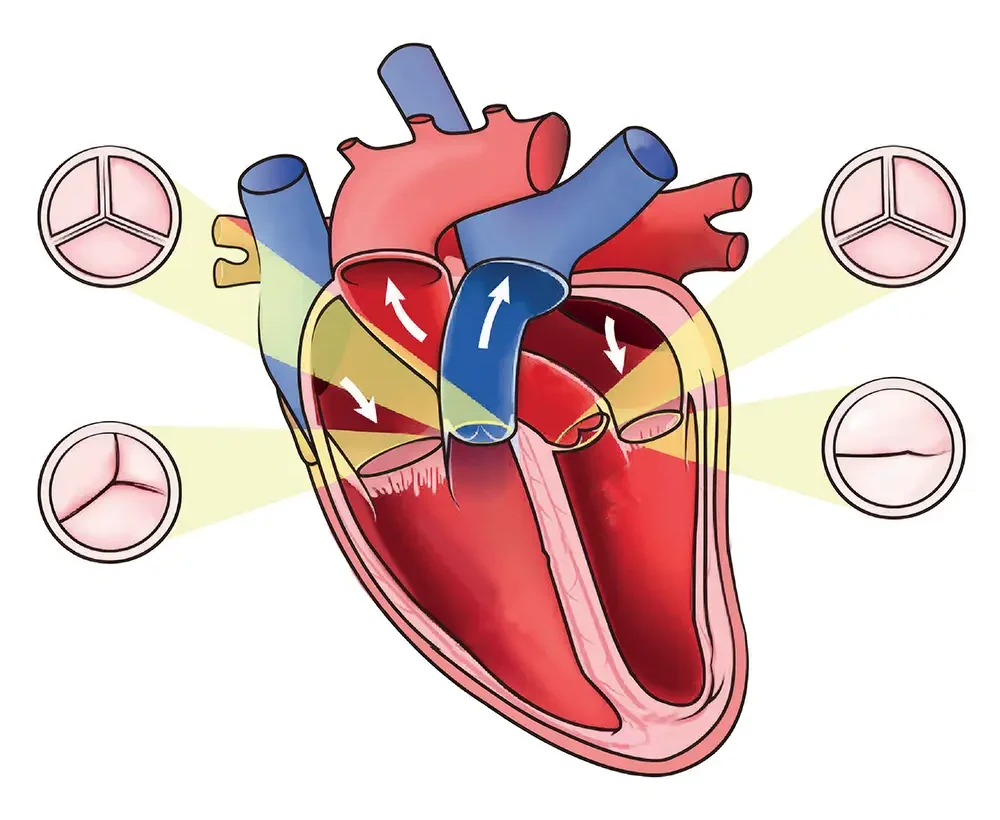
Heart valve disease is increasing as the population ages. Today, nearly 30 million people worldwide are estimated to be living with heart valve disease, a number that could double by 2050. In Europe, more than 10% of people over age 75 are believed to have moderate to severe valve disease.
The challenge is twofold:
Among all valve conditions, three diseases concentrate today’s major challenges: aortic stenosis, mitral regurgitation, and tricuspid regurgitation. They are common and carry a major burden in hospitalizations, loss of independence, and healthcare costs.
Modern structural cardiology has a defining date: 2002, when the world’s first transcatheter aortic valve implantation (TAVI) was performed at Rouen University Hospital by Alain Cribier.
This breakthrough opened the door to less invasive treatments adapted to older and more fragile patients, and inspired the expansion of catheter-based approaches to other heart valves.
Since 2002, more than 4 million patients worldwide have been treated with TAVI, with several hundred thousand procedures performed each year.
This legacy of innovation is not a glorious past to admire from a distance. It is a method, a culture, and a standard of excellence. Naturally, humans made a revolution and immediately turned it into a spreadsheet. Charming.
That is exactly what the 2026–2030 strategic plan aims to amplify.
The direction is clear.
By 2030, the Institute aims to help create care for heart valve disease that is:
This will be driven by the convergence of research, technology, and clinical expertise.
The objective: reduce preventable mortality, improve quality of life, and ensure every scientific advance becomes a concrete patient benefit.
The strategic plan is built around five complementary ambitions:
These commitments rely on shared principles:
The Institute’s distinctive approach is simple in theory, difficult in practice, and therefore worth doing.
Its four missions work together in continuity.
The goal is not isolated innovation hidden in a lab basement.
It is to make care pathways clearer, faster, and fairer by reducing diagnostic delays and regional disparities.
The scientific foundation relies in part on Inserm UMR 1096 ENVI, led by Jérémy Bellien, with expertise in endothelium, fibrosis, calcification, and heart failure.
This is essential to understanding disease progression and opening new therapeutic options.
The Medical Training Center (MTC) is a major asset:
All now essential in structural cardiology.
The project embraces a public health mission:
mobilizing patient associations, local stakeholders, decision-makers, and health authorities to improve recognition, early detection, and best-practice adoption.
The Institute is built on a core academic medical ecosystem bringing together:
It also extends through national and international partnerships, particularly those developed through RHU and FHU initiatives.
Methodology includes:
Metrics include:
Because apparently nothing says progress like indicators. Though in fairness, they do help.
The 2026–2030 strategy aims for practical benefits.
The Institute’s growth also depends on a structured philanthropy strategy, complementing public and competitive funding.
This support helps accelerate high-impact initiatives in:
All within an ethical and transparent framework.
A rare concept: money used responsibly.
The 2026–2030 strategic plan carries an ambition that is simple to state and demanding to achieve:
Bring together care, research, education, and innovation around one central conviction, placing the patient at the heart of every advance.
And establish the Institute as a leading force in France, Europe, and internationally.
Le projet 2026–2030 vise des bénéfices très concrets :
Le développement de l’Institut repose aussi sur une politique de mécénat structurée, complémentaire des financements publics et compétitifs, pour accélérer des initiatives à fort impact (recherche, innovation, formation, sensibilisation), dans un cadre éthique et transparent.
Le projet stratégique 2026–2030 porte une ambition simple à formuler, exigeante à réaliser : réunir soin, recherche, formation et innovation autour d’une conviction centrale — placer le patient au cœur de chaque avancée — et faire de l’Institut un acteur de référence en France, en Europe et à l’international.

On April 16, the heart of Rouen beat to the rhythm of prevention. On the forecourt of the Cathedral, the Alain Cribier Institute, together with Rouen University Hospital and Alliance du Cœur, transformed a complex public health issue into a unique human and educational experience.
A look back at a record-breaking day that reflects the very purpose of our Institute: medical excellence for all.
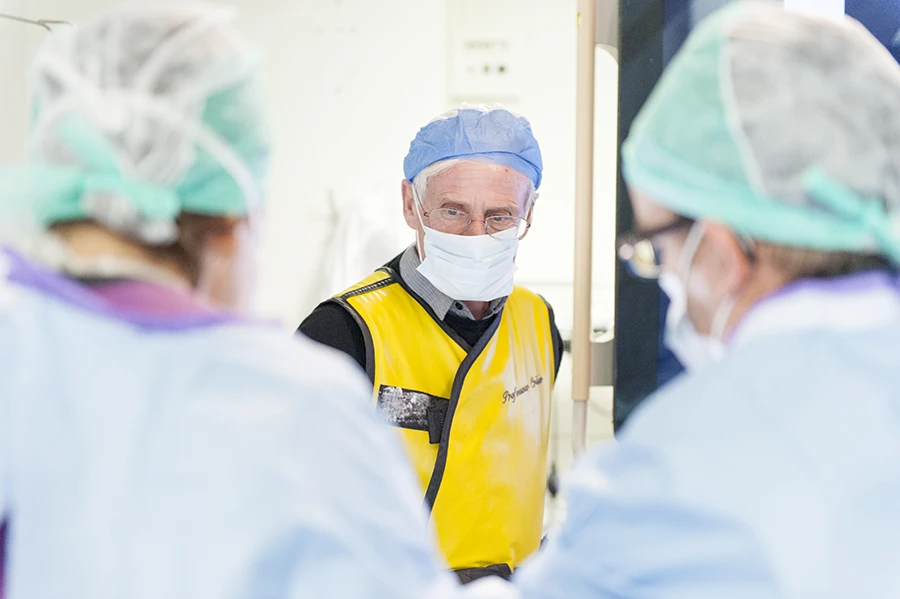
Professor Alain Cribier (1945–2024) is universally recognized as one of the greatest innovators in modern cardiology. His name is inseparable from a major medical revolution: the development of percutaneous treatment for heart valve disease, and in particular transcatheter aortic valve implantation, known as TAVI.
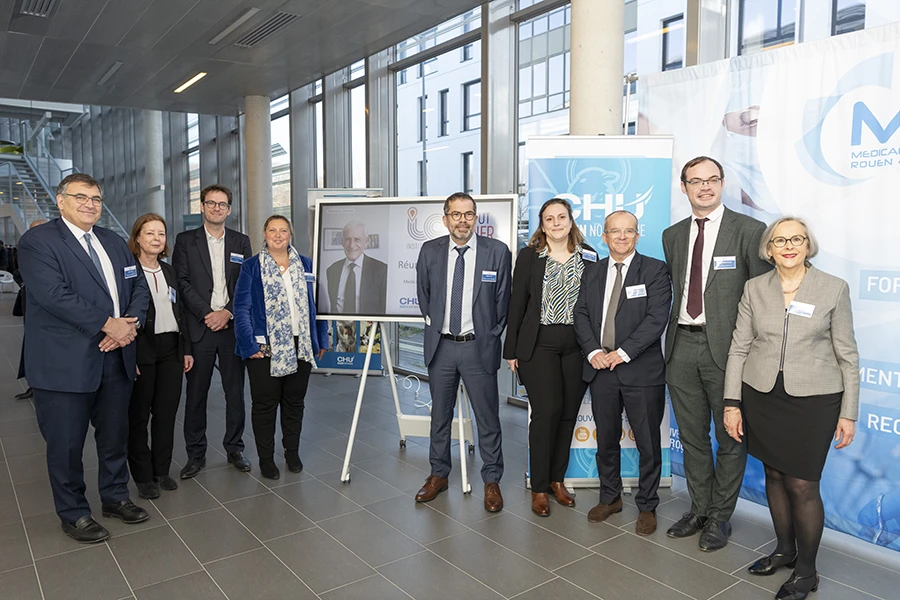
The Alain Cribier Institute was born from an exceptional medical history, but also from a shared determination to structure and extend a unique legacy in the field of heart valve disease.
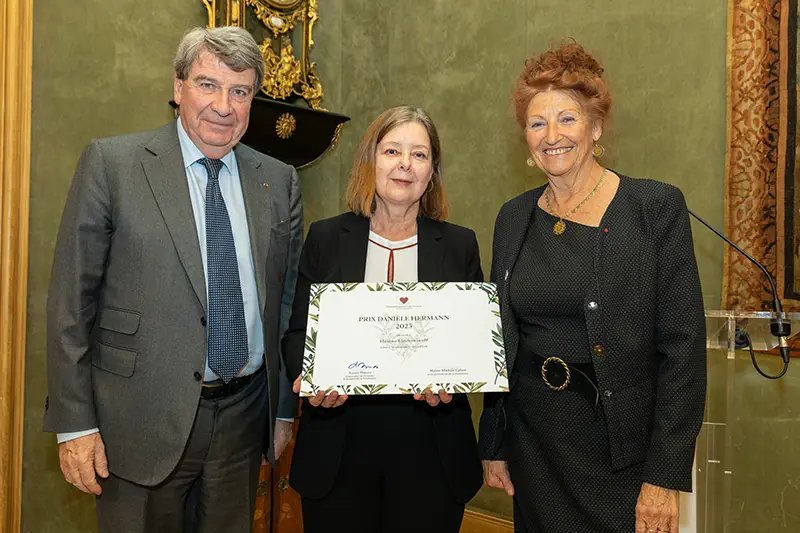
On Wednesday, April 1, 2026, Professor Hélène Eltchaninoff, Head of Cardiology at Rouen University Hospital, received the Danièle-Hermann Prize at the Palais de l’Institut de France. Awarded by the Cardiovascular Research Foundation (Institut de France), the prize includes €30,000 and recognizes a career dedicated to medical innovation and research in cardiovascular disease, particularly heart valve disease.
Heart valve disease is increasing as the population ages. Today, nearly 30 million people worldwide are estimated to be living with heart valve disease, a number that could double by 2050. In Europe, more than 10% of people over age 75 are believed to have moderate to severe valve disease.